Have you ever noticed your toilet rocking when you sit down? If so, you might wonder if this is something to be concerned about. While it may seem trivial, a rocking toilet can indicate a plumbing problem that you shouldn’t ignore. Left alone, a loose toilet can result in leaks, damaged floors, unpleasant odors, and costly repairs. Fortunately, most reasons a toilet rocks are easy to identify, and many can be fixed before they become major problems. Understanding why a toilet rocks and knowing when to call a trusted plumber can help protect your home and plumbing system.
Why Your Toilet Moves When You Sit Down
When a toilet is installed correctly, it should sit firmly against the floor without moving. If your toilet starts to rock when you sit down, something is preventing it from making solid contact with the floor or attaching securely to the drain flange.
Several parts work together to keep a toilet steady. These include the wax ring, closet bolts, toilet flange, and finished flooring. If any of these components become damaged, loose, or uneven, the toilet can begin to wobble. Identifying the source of the movement is the first step toward preventing larger plumbing problems.
Loose Closet Bolts
One of the most common reasons a toilet rocks is loose closet bolts.
Closet bolts secure the base of the toilet to the floor through the toilet flange. Over time, normal use can gradually loosen these bolts. As they loosen, the toilet begins to shift each time someone sits down.
Although tightening the bolts sounds simple, overtightening them can crack the porcelain base. If you’re unsure how tight they should be, it’s best to have a trusted plumber inspect the installation.
A Worn or Damaged Wax Ring
Another common issue is a worn or damaged wax ring. The wax ring creates a watertight seal between the toilet and the drain pipe.
Repeated movement can compress, crack, or shift the wax ring. Once the seal fails, wastewater or sewer odors can escape beneath the toilet.
Signs of a failing wax ring include:
- Water around the base of the toilet
- Strong sewer odors in the bathroom
- Soft or stained flooring
- Moisture after flushing
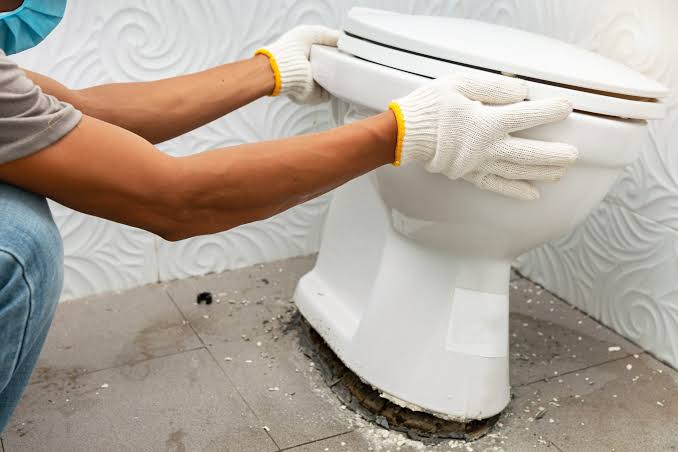
Replacing a damaged wax ring usually requires removing and reinstalling the toilet to restore the seal correctly.
Uneven Flooring
Not every rocking toilet is caused by the toilet itself.
Sometimes the finished flooring beneath the toilet is uneven because of tile installation, an aging subfloor, or normal settling of the home. Even a slight height difference can create noticeable movement.
Professional plumbers often install plastic shims to stabilize toilets sitting on uneven flooring while keeping the fixture level and secure.
A Damaged Toilet Flange
The toilet flange connects the toilet to the home’s drainpipe and anchors it to the floor.
If the flange cracks, rusts, or breaks, the toilet loses its stable foundation. This damage commonly occurs in older homes or after years of repeated movement.
A damaged flange creates more than a stability problem. It can eventually allow leaks beneath the flooring and lead to more extensive plumbing repairs.
Why You Shouldn’t Ignore a Rocking Toilet
Many homeowners continue using a rocking toilet because it still flushes normally.
However, every time the toilet rocks, it places additional stress on the wax ring, closet bolts, and flange. Over time, this repeated movement increases the risk of hidden water damage beneath the bathroom floor.
Ignoring the problem can lead to:
- Hidden leaks
- Mold and mildew growth
- Damaged subflooring
- Cracked toilet bases
- More expensive plumbing repairs
Addressing the issue early is usually much less expensive than repairing extensive water damage later.
Can Homeowners Fix a Rocking Toilet?
Some homeowners can correct minor movement by carefully tightening loose closet bolts or installing plastic toilet shims.
However, if the toilet continues to move, develops leaks, or shows damage around the base, the problem likely goes beyond a simple adjustment.
Removing a toilet incorrectly can damage the wax ring, crack the porcelain, or create additional plumbing issues. If you’re unsure what’s causing the movement, calling a trusted plumber is the safest option.
When to Call a Trusted Plumber
Catching this problem early makes it easier and less expensive to repair.
Contact a trusted plumber if you notice:
- Water leaking around the base of the toilet
- Sewer odors in the bathroom
- Significant movement when sitting
- Cracks in the porcelain
- Soft flooring near the toilet
- Movement that returns after tightening the bolts
A professional inspection can determine whether the problem involves the wax ring, toilet flange, flooring, or another plumbing component before more damage occurs.
Prevent Future Toilet Problems
Regular bathroom inspections can catch small issues before they become costly repairs.
To help keep your toilet stable:
- Check for movement every few months.
- Stop using the toilet if it begins to wobble noticeably.
- Inspect for moisture around the base.
- Repair small leaks promptly.
- Schedule routine plumbing maintenance if your home has older fixtures.
These simple habits help extend the life of your bathroom fixtures while reducing the risk of hidden water damage.
Protect Your Plumbing System
Understanding why your toilet rocks when you sit down allows you to fix a small problem before it becomes a major repair. Loose closet bolts, a damaged wax ring, uneven flooring, or a broken flange can all cause instability. A secure toilet is important for protecting both your bathroom and your plumbing system.
If your toilet rocks every time you sit down, don’t wait for leaks or water damage to appear. Having a trusted plumber inspect the problem can restore stability, protect your home, and keep your plumbing system working safely and efficiently for years to come.
If your toilet continues to rock or you suspect a hidden leak, don’t wait for the problem to get worse. Contact AC Plumbing Construction, https://acplumbingconstructioninc.com/ for professional plumbing inspections, toilet repairs, and reliable service throughout San Diego County.